

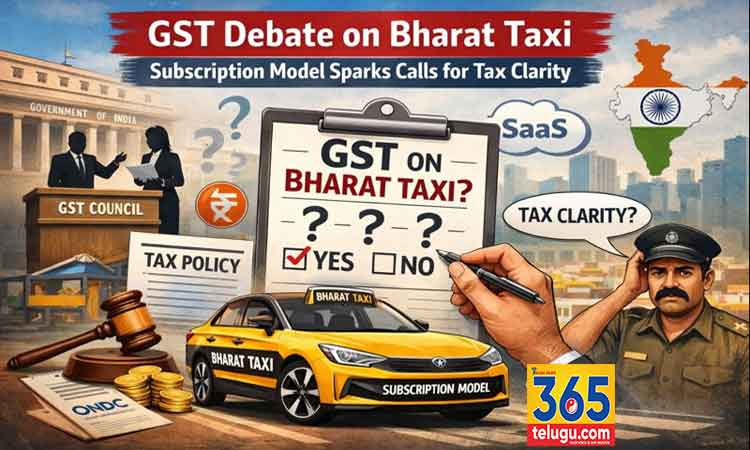
365telugu.com online news,New delhi,January 24th,2026: The recent launch of Bharat Taxi, a driver-owned cooperative ride-hailing platform, has ignited a significant policy debate regarding India’s Goods and Services Tax (GST) framework.
As the platform gains traction as a low-commission alternative to private giants, industry experts and driver unions are calling for a clear distinction between commission-based aggregators and subscription-based SaaS models.
Backed by major cooperatives including Amul and IFFCO, Bharat Taxi operates as a democratic, member-led service. Unlike traditional aggregators that deduct high commissions from every trip, Bharat Taxi utilizes a zero-commission, subscription-based engine. Drivers pay a fixed membership fee to access the technology, while the actual fares are settled directly between drivers and passengers.
ఇదీ చదవండి..గల్ఫ్ దేశాల్లోనే అతిపెద్ద ఫిల్మ్ రిస్టోరేషన్ కేంద్రం ప్రారంభం..
Read this also..Prasad and World Sound & Vision Launch GCC’s Largest Film Restoration Centre in Riyadh..
Read this also..Flipkart Unveils ‘Crafted by Bharat’ Sale for Republic Day..
Read this also..Volkswagen India Begins Local Assembly of Premium Tayron R-Line SUV..
At the heart of the issue is the application of Section 9(5) of the GST Act. Currently, e-commerce operators are liable for a 5% GST on passenger transport services supplied “through” their platforms.
However, advocates for Bharat Taxi argue that SaaS models function differently:
Direct Payments: Fares are collected offline by drivers, not the platform.
Pricing Control: The platform does not set or control the final fare.
Economic Threshold: Most drivers earn well below the ₹20 lakh GST registration threshold.
Driver unions are concerned that a uniform 5% tax on every ride would effectively penalize drivers for choosing a more equitable platform.
Zahir Hussain, President of the Tamil Nadu Auto Call Taxi Drivers Union Federation, noted that platforms like Bharat Taxi, Namma Yatri, and Rapido—which follow the subscription model—should not be taxed the same as traditional aggregators. “Imposing GST on every ride will directly reduce drivers’ daily earnings,” Hussain stated, urging the government to differentiate between discovery-only platforms and full-service aggregators.
The GST Council now faces a critical decision: whether to maintain a broad tax umbrella or introduce differentiated treatment for driver-owned platforms. Proponents argue that aligning tax policy with the “Sahakar se Samriddhi” (Prosperity through Cooperation) vision is essential to prevent drivers from returning to informal, unregulated systems and to ensure the success of inclusive digital public infrastructure.